Upneeq
The Prescription Eye Drop That Lifts Droopy Upper Eyelids
- Adults with low-lying or droopy upper eyelids (acquired blepharoptosis)
- Those who want a non-surgical, once-daily option
- Patients seeking a more open, refreshed, awake-looking eye

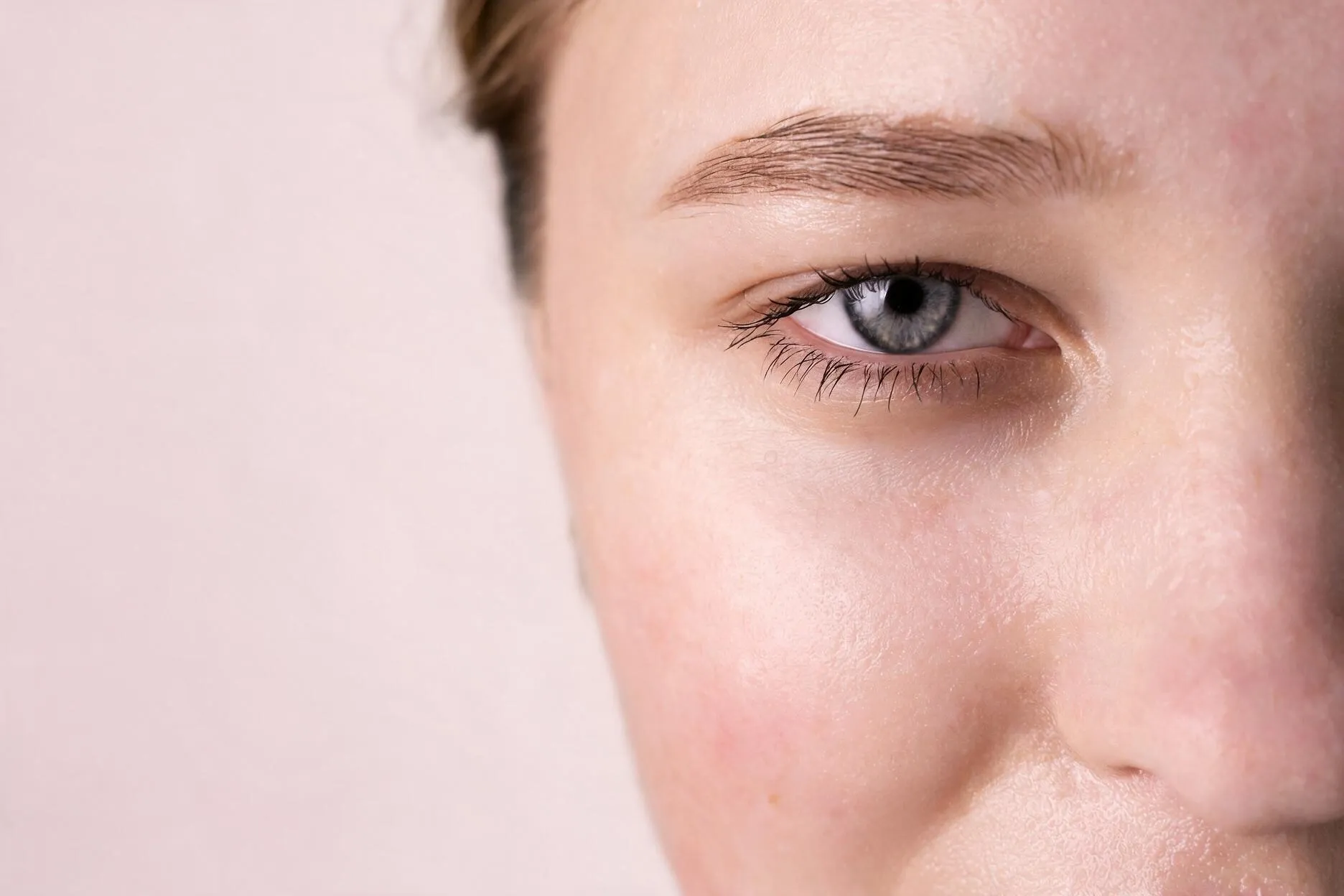

Recognizing the Signs
Droopy upper eyelids, known medically as ptosis or acquired blepharoptosis, occur when the upper lid sits lower than it should and partially covers the eye. A closely related concern is hooded eyes, where excess or heavy skin folds down over the lash line. Both can make you look tired, older, or less alert even when you feel wide awake and well rested.
When you catch your reflection and notice that your eyes seem smaller, sleepier, or uneven from one side to the other, you may be seeing early ptosis or hooding. In mild cases it is mostly a cosmetic concern, softening the open, refreshed look of the eyes. When drooping is more significant it can begin to affect the upper field of vision.
Many patients tell Melissa that eyeshadow disappears into the fold, that their eyes look heavy in photos, or that friends keep asking if they are exhausted. It can be frustrating to feel energetic while your eyes tell a different story. The good news is that gentle, non-surgical options can help lift and open the eyes.

Understanding the Root Causes
The upper eyelid is held open largely by the levator muscle and its thin tendon, the aponeurosis. Over the years this tendon can stretch or loosen, so the lid no longer lifts as high as it once did. This gradual stretching is the most common reason eyelids begin to droop with age, and the result is acquired blepharoptosis, the clinical term for a low-sitting upper lid.
Several other factors contribute. Genetics play a large role, and some people simply inherit heavier or lower lids. Long-term contact lens use, prior eye surgery, and repeated rubbing can loosen the tendon further. Certain nerve and muscle conditions can also cause ptosis, which is why a careful assessment matters. When the eyebrow itself descends with age, the extra weight pushes down on the upper lid and creates a heavy, hooded look on top of any true lid droop.
For mild, everyday drooping, non-surgical care can make a real difference. A prescription eye drop that stimulates one of the small lid-lifting muscles, or a neuromodulator placed to gently raise the brow, can open the eyes without surgery. When drooping is severe or structural, an oculoplastic surgeon may recommend a procedure such as blepharoplasty or ptosis repair. Melissa will help you understand which path fits your situation. You can learn more about the eye through the American Academy of Ophthalmology.

Knowing Which One You Have
Understanding whether you have true ptosis, hooded eyes, or a combination of both helps determine which approach is right for you. True ptosis means the edge of the upper eyelid itself sits low over the colored part of the eye, usually because the levator muscle or its tendon has weakened or stretched.
Hooded eyes are different. Here the lid margin may be in a normal position, but loose or heavy skin from the upper lid or a descending brow folds down over it. This creates the appearance of drooping even when the lid muscle is working well. Many people have a little of both, which is why the eyes can look tired in more than one way.
This is why Melissa assesses your eyes carefully at rest and in motion. For mild ptosis, a prescription drop such as Upneeq can lift the upper lid a couple of millimeters. For brow-driven hooding, a carefully placed Botox brow lift can relax the muscles that pull the brow down so it sits slightly higher. For heavier structural changes, she will refer you for a surgical opinion so you have realistic expectations.


Expert Care in Wellington


Recognizing When to Seek Help
In many mild to moderate cases, yes. Upneeq, a prescription eye drop, can lift the upper lid a couple of millimeters, and a Botox brow lift can relax the muscles that pull the brow down so the eyes look more open. During your consultation Melissa will tell you whether a non-surgical option is a good fit for you.
Upneeq is a prescription eye drop containing oxymetazoline that gently stimulates Muller's muscle, one of the small muscles that lifts the upper eyelid. A single daily drop can raise the lid and open the eye, with the effect usually visible within a couple of hours and lasting through much of the day.
A Botox brow lift places a small amount of neuromodulator to relax the muscles that pull the brow downward. When those depressor muscles relax, the brow and upper lid can sit slightly higher, which reduces a heavy, hooded look. It works best when brow descent is contributing to the drooping.
When drooping is severe, affects your vision, or comes from significant stretching of the lid tendon, a surgical procedure such as blepharoplasty or ptosis repair may give the best result. Melissa will let you know when a referral to an oculoplastic surgeon makes sense and helps set realistic expectations.
Eyelid drooping is often uneven because the levator tendon can stretch differently on each side, or because of genetics and prior eye events. Sudden or significant asymmetry should be evaluated, since certain nerve and muscle conditions can also cause a droop.
Often they are mainly cosmetic, softening the open look of the eyes. When drooping becomes significant it can start to block the upper field of vision. Melissa assesses both the appearance and function of your lids so you get the right recommendation.
It depends on whether you have true ptosis, brow-driven hooding, or a combination, and how significant the drooping is. Melissa examines your eyes at rest and in motion, then explains whether Upneeq, a Botox brow lift, or a surgical consult is the best path for your goals.